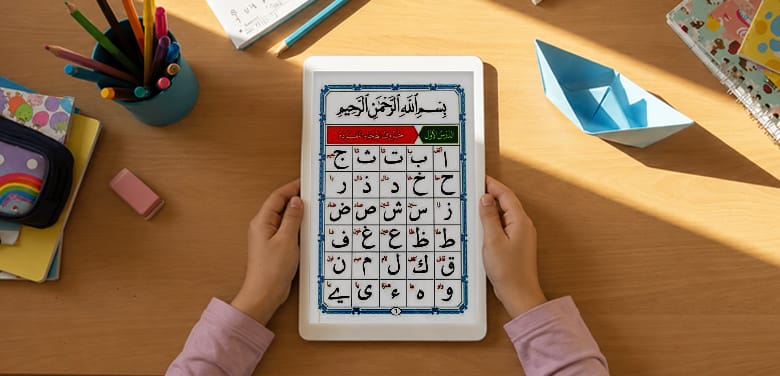
The good news: you don’t need to be a scholar, and you don’t need to speak fluent Arabic. What you need is a clear method, a realistic routine, and the patience to take it one small step at a time. This guide walks you through exactly that — a practical, step-by-step approach that thousands of non-Arabic-speaking families use successfully every year.
Start with intention and environment, not pressure
Before the first letter, two things matter more than any technique.
The first is intention. Teaching your child the Quran is an act of worship in itself — not a checkbox or a performance for relatives. When you approach it that way, the small daily effort becomes meaningful rather than stressful, and children absorb that calm energy from you.
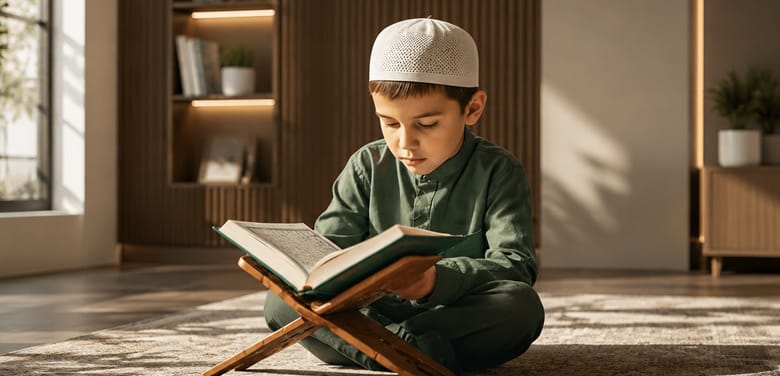
The second is environment. You don’t need a dedicated study room. A quiet corner, free from TV and phone distractions, with a comfortable place to sit and a Quran stand, is enough. What matters is that the space feels calm and consistent — your child’s brain starts associating that corner with focused, peaceful learning.
The single most important rule: consistency beats duration
If you take just one thing from this guide, make it this. Ten to fifteen focused minutes every day will always beat one long, exhausting session once a week.
Young children have short attention spans — that’s biology, not misbehaviour. A four-year-old can genuinely focus for about ten minutes; a seven-year-old for maybe twenty. Fighting that limit creates resistance and, worse, teaches your child that Quran time is something to dread. Working with it builds a habit that lasts a lifetime.
Pick a consistent daily time — after Fajr, after school, or before bed — and protect it. The routine itself does half the teaching.
The step-by-step path: what to teach, and in what order
One of the biggest mistakes parents make is skipping steps. Quran learning has a natural sequence, and each stage builds on the one before it. Here’s the correct order.
Step 1 — The Arabic letters and sounds
Everything begins here. Before your child can read a single word, they need to recognise all 28 Arabic letters and pronounce each one from its correct point. The classical, time-tested tool for this is the Noorani Qaida — a structured primer used in Quran academies worldwide precisely because it works. If you’re teaching at home, start with the letters in isolation, then their sounds, then the short vowels (harakat). Don’t rush this stage; a shaky foundation here causes problems for years. A structured Noorani Qaida course can give your child the correct start if you’re unsure of your own pronunciation.
Step 2 — Joining letters and reading words
Once letters and vowels are solid, your child learns to connect them into words and read with tanween, sukoon, shaddah, and madd. This is where reading actually begins. Progress feels slow at first, then suddenly accelerates — the moment the letters “click” into words is one every parent treasures. If home teaching stalls here, dedicated Quran reading lessons can move your child past the plateau with a patient tutor.
Step 3 — Correct pronunciation with Tajweed
Reading the Quran isn’t just about recognising words — it’s about pronouncing them the way they were revealed. This is where Tajweed comes in: the rules that govern correct recitation. For young children, this starts gently — fixing common pronunciation habits and introducing the basic rules through short surahs. Many non-Arabic-speaking parents feel out of their depth here, and that’s completely normal. Learning Tajweed properly usually calls for a qualified ear; our Tajweed classes are built exactly for this stage.
Step 4 — Memorisation (Hifz), starting small
Memorisation doesn’t wait until reading is perfect — the two often grow together. Start with the short surahs of Juz Amma, the ones children love and hear often in prayer. Use the classical repetition method: recite a verse, have your child repeat it several times, then review yesterday’s verses before adding new ones. If your child shows a strong memory and real enthusiasm, a structured Quran memorization programme can turn that spark into a complete Hifz journey.
Step 5 — Understanding what they recite
Reading and memorising are powerful, but understanding is what makes the Quran come alive for a child. You don’t need to teach full Tafseer — simply explaining the meaning of a short surah, or the story behind it, transforms recitation from a task into a connection. Surah Al-Feel and the story of the elephant, Surah Al-Ikhlas and the oneness of Allah — these stories build love, not just skill. As your child grows, a dedicated Tafseer course deepens that understanding properly.
A realistic weekly routine you can actually follow
Advice is easy; a plan is useful. Here’s a sample weekly routine for a young beginner that fits around real family life:
- Monday to Friday (10–15 min/day): 5 minutes reviewing yesterday’s letters or verses, 5–10 minutes learning something new.
- Weekend (one slightly longer session): review the week’s progress, introduce a short story from the Quran, and celebrate what your child achieved.
- Every day, passively: play recitation by a clear reciter (like Sheikh Abdul Basit or Mishary Rashid) in the background — during breakfast, in the car. Children absorb rhythm and pronunciation effortlessly this way.
Keep a simple progress chart on the wall. Children are motivated by visible progress, and small immediate rewards — a sticker, praise, choosing dinner — work far better than distant promises.
What if you don’t speak Arabic — or can’t read the Quran well yourself?
This is the question thousands of parents are too shy to ask out loud, so let’s answer it honestly: you can absolutely raise a Quran-reading child even if you can’t read well yourself. Here’s how.
- Learn alongside your child. Many parents start their own Quran journey at the same time as their child’s. It sets a powerful example — children learn most from watching their parents try.
- Use audio as your co-teacher. A clear reciter your child imitates daily does a great deal of the pronunciation work for you.
- Bring in a qualified tutor for the parts you can’t cover. There’s no shame in this — it’s the wisest move. A tutor handles the correct pronunciation and Tajweed while you handle the consistency, encouragement, and love at home. That partnership is often the most effective setup of all.
For families where Arabic isn’t spoken at home, online Quran classes for kids solve the exact gap most parents worry about — a native-speaking, child-specialised tutor teaching one-to-one, in clear English, while you stay involved every step of the way.
Keep it joyful — the goal is love, not just fluency
A child who reads the Quran fluently but resents it has missed the point. A child who reads slowly but lights up at Quran time has everything they need — the fluency will come.
Tell the stories. Celebrate small wins. Never make a mistake feel like a failure. End every session on something your child does well, so they walk away feeling capable. The relationship your child builds with the Quran in these early years will shape how they feel about it for the rest of their life — and that relationship is built far more by warmth than by correction.
When to move from home teaching to structured lessons
Home teaching is a beautiful foundation, but there are clear signs it’s time to add a qualified tutor:
- Your child has plateaued and isn’t progressing despite consistent effort.
- You’re unsure whether their pronunciation is correct — and can’t tell what to fix.
- You’ve reached Tajweed, and you know your own recitation has gaps.
- Your child learns better from someone who isn’t a parent (very common — and completely normal).
- You simply don’t have the time consistency demands, and the guilt is mounting.
None of these mean you’ve failed. They mean you’ve reached the natural limit of home teaching — and the smartest parents recognise that moment and bring in help. Whether your child is a complete beginner or ready for advanced study toward Quran Ijazah certification, the right tutor meets them exactly where they are.
Your next step
Teaching your child the Quran at home comes down to three things: a calm environment, a consistent daily routine, and the right sequence of steps — letters, reading, Tajweed, memorisation, and understanding. Start small, stay consistent, and keep it joyful.
And when you reach a stage that’s beyond what you can teach alone, you don’t have to figure it out by yourself. A free trial lesson with a qualified, child-friendly tutor is the easiest way to see how a structured programme can support the foundation you’re building at home — no commitment, no pressure. The journey you start today can shape your child’s relationship with the Quran for a lifetime.
FAQ:
Can I teach my child the Quran at home if I don’t speak Arabic?
Yes. Thousands of non-Arabic-speaking parents do exactly this. The key is combining what you can offer — consistency, encouragement, and a calm environment — with tools that cover what you can’t, such as daily audio recitation for pronunciation and a qualified tutor for correct reading and Tajweed. Many parents also learn alongside their child, which sets a powerful example.
What is the best age to start teaching a child the Quran?
Most children are ready to begin between ages four and seven, once they can sit and focus for a short session. Younger children (0–6) absorb sounds and short surahs naturally through daily listening, even before formal lessons. It’s never too late to start, and older children often progress faster because their focus and language skills are more developed.
How long should each Quran session be for a child?
Ten to fifteen minutes daily for younger children, extending to twenty or thirty as they grow. Consistency matters far more than length — a short daily session beats a long weekly one every time. Fighting a young child’s natural attention span usually creates resistance rather than progress.
What should I teach first when teaching the Quran at home?
Follow the natural sequence: first the Arabic letters and their sounds (usually through Noorani Qaida), then joining letters to read words, then correct pronunciation with basic Tajweed, then memorisation of short surahs, and finally understanding the meaning. Skipping steps — especially the letter foundation — causes problems that surface later.
When should I get a Quran tutor instead of teaching at home?
Consider a tutor when your child plateaus, when you’re unsure their pronunciation is correct, when you reach Tajweed and know your own recitation has gaps, or when time constraints make consistency difficult. Bringing in a qualified tutor isn’t a failure — it’s often the most effective setup, with the tutor handling pronunciation while you provide encouragement and routine at home.
Online Quran Classes for Kids
Give your child a calm, confident start with the Quran — from their very first Arabic letter to reading and reciting with Tajweed Our online Quran classes for kids are one to one, taught by patient tutors who specialise in teaching children, and built around your family’s schedule Perfect for absolute beginners, non Arabic speakers, and children learning at home anywhere in the world
Tajweed Classes Online
Recite the Quran the way it was meant to be recited Our Tajweed classes online take you from correct pronunciation of every letter to applying the full rules of recitation across the entire Quran. Live one to one lessons with patient, qualified tutors — whether you’re starting from zero or fixing habits you’ve had for years
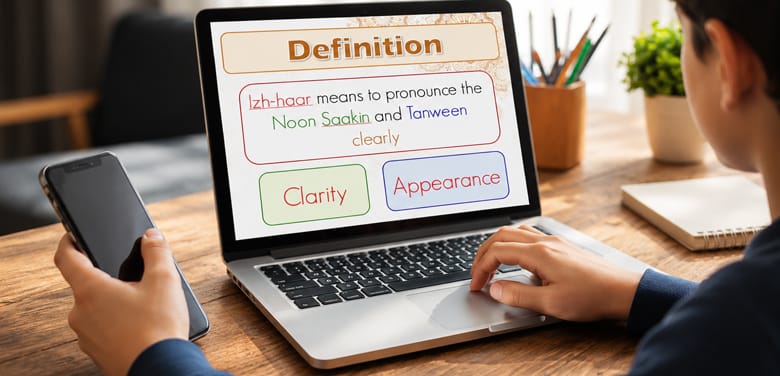
Quran Tafseer Online Course
Understand what you recite. Our online Quran Tafseer Online takes you beyond translation into the actual meaning, context, and application of every verse — the way classical scholars taught it. Live one-to-one lessons in clear English, built for anyone who reads the Quran but wants to finally understand it.
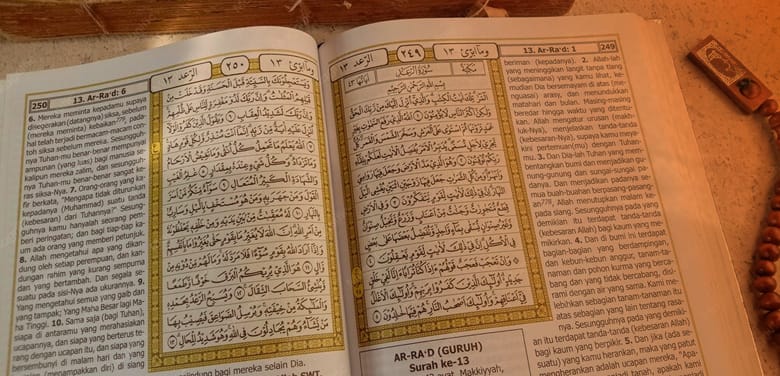
Quran Memorization Course (Hifz)
Memorize the Quran with a structured, honest programme built for real life — not empty promises. Our online Hifz course pairs you one-to-one with a qualified Hafiz tutor and follows the classical Sabaq, Sabqi and Manzil system that has produced Huffaz for generations. Start with Juz Amma or aim for the complete Quran. Your pace, your plan
Quran Ijazah Online Course
Earn your Quran Ijazah online through a certified Mujeez Sheikh with an authentic sanad connecting back to the Prophet ﷺ. Our Quran Ijazah online course is a serious, one-to-one path to formal certification in Hafs ‘an ‘Asim, full Hifz, or the higher Qira’at — the same standard used by classical scholars, delivered live from anywhere in the world.
Learn to Read Quran Online
Learn to Read Quran Online from the very first Arabic letter — even if you’ve never touched a Mushaf before. Our online Quran reading classes use the classical Noorani Qaida method with live one-to-one tutors who specialise in absolute beginners. Built for adults, children, reverts, and anyone who’s felt “it’s too late.” It isn’t.
Noorani Qaida Online Course
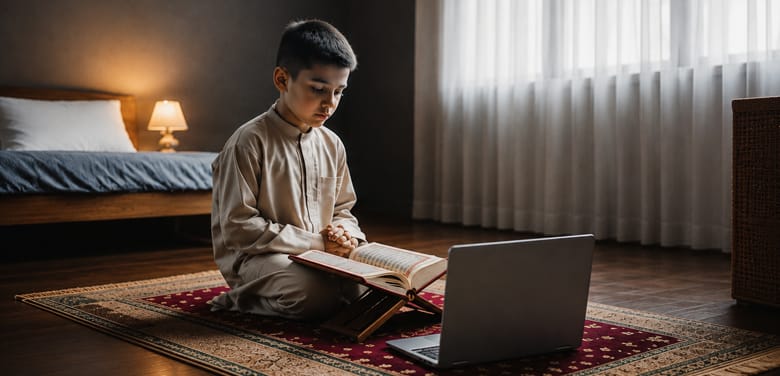
Learn Noorani Qaida online with live one-to-one lessons — the classical foundation that has taught non-Arabic speakers to read the Quran for generations. Our Noorani Qaida online course covers all 17 lessons of the traditional Qaida with certified tutors specialising in absolute beginners. Built for children, adults, reverts, and anyone starting their Quran journey from the very first Arabic letter.