
Daily Duas for Kids: 12 Short Duas with Meanings (and How to Teach Them)
Duas are one of the most beautiful ways to help children feel close to Allah throughout the day — not only in salah, but when they eat, sleep, wake up, leave the house or sneeze. A child who learns these short duas grows up remembering Allah in ordinary moments, which is exactly what the Sunnah teaches.
Below are twelve short, authentic duas for kids, each with the Arabic, an easy transliteration, the meaning and its source. Afterwards, you will find practical tips for teaching them at home in a way that sticks.
Why teach children daily duas?
Allah says: “Call upon Me; I will respond to you” (Quran 40:60). Teaching children duas teaches them that Allah is always near, always listening and the One to turn to for everything.
Daily duas also build good habits naturally. Because each dua is linked to an action children do every day, the action itself becomes the reminder. Saying “Bismillah” before eating, or a dua before sleeping, quickly becomes as automatic as brushing teeth.
12 short duas for kids
1. Before eating
بِسْمِ اللَّهِ
Bismillah — “In the name of Allah.”
The Prophet ﷺ taught a young boy: “Say Bismillah, eat with your right hand, and eat from what is in front of you” (Sahih al-Bukhari 5376).
If you forget at the start:
بِسْمِ اللَّهِ أَوَّلَهُ وَآخِرَهُ
Bismillahi awwalahu wa akhirahu — “In the name of Allah, at its beginning and at its end.” (Sunan Abi Dawud and Jami’ at-Tirmidhi)
2. After eating
الْحَمْدُ لِلَّهِ الَّذِي أَطْعَمَنِي هَذَا وَرَزَقَنِيهِ مِنْ غَيْرِ حَوْلٍ مِنِّي وَلَا قُوَّةٍ
Alhamdu lillahil-ladhi at’amani hadha wa razaqanihi min ghayri hawlin minni wa la quwwah — “All praise is for Allah who fed me this and provided it for me without any might or power from myself.” (Sunan Abi Dawud and Jami’ at-Tirmidhi)
For very young children, simply saying “Alhamdulillah” after meals is a perfect start.
3. Before sleeping
بِاسْمِكَ اللَّهُمَّ أَمُوتُ وَأَحْيَا
Bismika Allahumma amutu wa ahya — “In Your name, O Allah, I die and I live.” (Sahih al-Bukhari 6324)
4. When waking up
الْحَمْدُ لِلَّهِ الَّذِي أَحْيَانَا بَعْدَ مَا أَمَاتَنَا وَإِلَيْهِ النُّشُورُ
Alhamdu lillahil-ladhi ahyana ba’da ma amatana wa ilayhin-nushur — “All praise is for Allah who gave us life after causing us to die, and to Him is the return.” (Sahih al-Bukhari 6324)
5. Before entering the toilet
اللَّهُمَّ إِنِّي أَعُوذُ بِكَ مِنَ الْخُبُثِ وَالْخَبَائِثِ
Allahumma inni a’udhu bika minal-khubuthi wal-khaba’ith — “O Allah, I seek refuge in You from evil and evil beings.” (Sahih al-Bukhari 142 and Sahih Muslim)
Teach children to say it before going in, and to enter with the left foot.
6. After leaving the toilet
غُفْرَانَكَ
Ghufranak — “I ask for Your forgiveness.” (Sunan Abi Dawud and Jami’ at-Tirmidhi)
7. When leaving the house
بِسْمِ اللَّهِ، تَوَكَّلْتُ عَلَى اللَّهِ، وَلَا حَوْلَ وَلَا قُوَّةَ إِلَّا بِاللَّهِ
Bismillah, tawakkaltu ‘alallah, wa la hawla wa la quwwata illa billah — “In the name of Allah, I place my trust in Allah, and there is no might nor power except with Allah.” (Sunan Abi Dawud and Jami’ at-Tirmidhi)
This is a lovely dua to say together at the front door on the way to school.
8. When sneezing
When your child sneezes, they say:
الْحَمْدُ لِلَّهِ
Alhamdulillah — “All praise is for Allah.”
The person who hears it replies:
يَرْحَمُكَ اللَّهُ
Yarhamukallah — “May Allah have mercy on you.”
And the one who sneezed answers:
يَهْدِيكُمُ اللَّهُ وَيُصْلِحُ بَالَكُمْ
Yahdikumullahu wa yuslihu balakum — “May Allah guide you and set your affairs right.” (Sahih al-Bukhari 6224)
Children love this one because it is a little conversation between two people.
9. For knowledge (before studying or homework)
رَبِّ زِدْنِي عِلْمًا
Rabbi zidni ‘ilma — “My Lord, increase me in knowledge.” (Quran 20:114)
10. For parents
رَبِّ ارْحَمْهُمَا كَمَا رَبَّيَانِي صَغِيرًا
Rabbir-hamhuma kama rabbayani saghira — “My Lord, have mercy on them as they raised me when I was small.” (Quran 17:24)
11. For goodness in this life and the next
رَبَّنَا آتِنَا فِي الدُّنْيَا حَسَنَةً وَفِي الْآخِرَةِ حَسَنَةً وَقِنَا عَذَابَ النَّارِ
Rabbana atina fid-dunya hasanatan wa fil-akhirati hasanatan wa qina ‘adhaban-nar — “Our Lord, give us good in this world and good in the Hereafter, and protect us from the punishment of the Fire.” (Quran 2:201)
This was one of the duas the Prophet ﷺ made most often (Sahih al-Bukhari 6389 and Sahih Muslim).
12. When planning to do something
إِنْ شَاءَ اللَّهُ
In sha Allah — “If Allah wills.”
Allah teaches us not to say we will do something tomorrow without adding “if Allah wills” (Quran 18:23–24). It is a simple phrase that teaches children that everything happens by Allah’s will.
How to teach duas for kids at home
Start with the shortest ones
For children aged two to four, begin with one-word or two-word duas: Bismillah, Alhamdulillah, Ghufranak and In sha Allah. Success with short duas builds confidence for longer ones.
One dua a week
Pick one dua, say it together every time the moment comes up, and only add a new one when it is automatic. Twelve duas in three months is a wonderful achievement.
Say it out loud, every time
Children learn duas by hearing them repeatedly in the right moment. If you say the dua out loud before every meal or every time you leave the house, your child will soon be saying it with you — and then reminding you.
Explain the meaning
A dua means far more when a child understands it. Talk about why we thank Allah for food, or what it means to trust Allah when we leave home. Our Islamic Studies classes teach the meaning behind duas and daily adhkar in an age-appropriate way.
Use visual reminders
Stick a small card with the dua for eating on the kitchen table, the dua for sleeping by the bed and the dua for leaving the house by the front door. Pictures help non-readers connect the dua to the moment.
Move from transliteration to Arabic
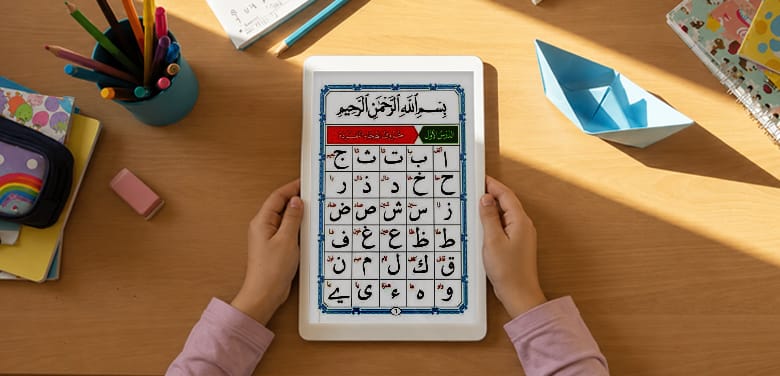
Transliteration is a useful bridge for young children, but it cannot capture every Arabic sound. As your child learns to read Arabic — for example with the Noorani Qaida — encourage them to read the duas in Arabic.
Make your own duas too
Alongside these Sunnah duas, teach children that they can talk to Allah in their own words, in any language, about anything — a test at school, a poorly grandparent or a friend who is sad. That personal connection is the heart of dua.
Building a routine around duas
Duas work best as part of a wider daily routine with salah and Quran. If you are building that routine now, read our guides on how to teach a child to pray and the best short surahs for kids to memorise.
If you would like a teacher to support your child’s Quran, Arabic and Islamic learning, our online Quran classes for kids are one-to-one with Al-Azhar certified teachers. You can book a free trial lesson — no card required.
FAQ:
What is the first dua to teach a child?
“Bismillah” (In the name of Allah) before eating is usually the first dua children learn, because it is short, easy to say and used several times a day. “Alhamdulillah” after eating is a natural second.
At what age should children learn duas?
Children can start hearing and repeating short duas from as young as two. By four or five, most children can learn the duas for eating, sleeping, waking and the toilet. Longer duas from the Quran are usually easier from around six or seven.
Can children make dua in English?
Yes. Dua can be made in any language, and children should be encouraged to talk to Allah in their own words. It is also good to learn the Sunnah duas in Arabic, as they are the words the Prophet ﷺ taught.
What is the dua before sleeping for kids?
The dua before sleeping is “Bismika Allahumma amutu wa ahya” — “In Your name, O Allah, I die and I live” (Sahih al-Bukhari). Many families also recite Ayat al-Kursi and the last three surahs of the Quran as part of the bedtime routine.
How can I help my child remember duas?
Say each dua out loud in the right moment every day, teach one at a time, explain the meaning, and place small reminder cards where the dua is used. Children remember duas best when they hear them consistently from their parents.
Learn Islamic Studies Online
The full curriculum of the Islamic sciences — under one structured programme. Our Islamic Studies course covers Aqeedah (creed), Fiqh (jurisprudence), Hadith (Prophetic traditions), Tafseer (Quranic exegesis), Seerah (Prophet’s biography), Tazkiyah (spiritual purification), and the biographies of the Sahabah. Live one-to-one lessons with qualified scholars. Three progressive tracks — Foundation, Comprehensive, and Scholar — so you go as deep as you decide. No scattered YouTube. No random khutbah snippets. Islamic knowledge, structured the way scholars have transmitted it for 1,400 years.

Online Quran Classes for Kids
Give your child a calm, confident start with the Quran — from their very first Arabic letter to reading and reciting with Tajweed Our online Quran classes for kids are one to one, taught by patient tutors who specialise in teaching children, and built around your family’s schedule Perfect for absolute beginners, non Arabic speakers, and children learning at home anywhere in the world
Noorani Qaida Online Course
Learn Noorani Qaida online with live one-to-one lessons — the classical foundation that has taught non-Arabic speakers to read the Quran for generations. Our Noorani Qaida online course covers all 17 lessons of the traditional Qaida with certified tutors specialising in absolute beginners. Built for children, adults, reverts, and anyone starting their Quran journey from the very first Arabic letter.
Explore Our Articles
Short Surahs for Kids: 12 Surahs in the Best Order to Memorise
The 12 best short surahs for kids in the right order to memorise, what each one means in child-friendly words,…
Start Reading
How to Teach a Child to Pray: A Gentle 4-Stage Guide by Age
How to teach a child to pray (salah) gently, step by step: what the Sunnah says, what to teach at…
Start Reading
How to Learn Islam for Beginners: A Roadmap Through the Islamic Sciences
Start Reading