This guide takes a different approach. We’ll use the actual data — from the U.S. Foreign Service Institute and the CEFR framework — and translate it into realistic milestones based on how much you actually study each week. No hype, no false promises. Just an honest answer to the question: how long does it take to learn Arabic?
The short answer
For most English speakers, reaching solid conversational ability in Arabic takes roughly 1 to 2 years of consistent study, and full professional-level fluency takes considerably longer. But that range is almost meaningless without context — because “learn Arabic” can mean anything from reading the alphabet to debating politics in Cairo. Your real timeline depends on three things: your goal, which Arabic you study, and — above all — how many hours per week you put in.
What the FSI data actually says (and the Category IV vs V confusion)
The most-cited figure comes from the U.S. Foreign Service Institute (FSI), which trains American diplomats. Their data is the gold standard because it measures real learners reaching a defined proficiency level under intensive instruction.
Here’s the honest version most sites get wrong. On the FSI’s current four-tier scale, Arabic is a Category IV language — the hardest tier for English speakers, requiring about 2,200 class hours (roughly 88 weeks) to reach “Professional Working Proficiency.” It shares that tier with Mandarin, Cantonese, Japanese, and Korean.
You’ll also see Arabic called “Category V” on many websites. That’s not wrong — it’s just based on the older five-tier scale the FSI used to publish, where the super-hard languages sat at Category V. Same 2,200-hour reality; different numbering. So when one site says IV and another says V, they’re describing exactly the same difficulty — don’t let the inconsistency confuse you.
One crucial caveat almost no one mentions: that 2,200-hour figure assumes intensive, full-time, instructor-led study — roughly 25 or more hours a week with expert teachers. It is not the timeline for someone doing an hour here and there. Which brings us to the number that actually matters.
The variable that decides everything: your weekly hours
This is the single biggest factor, and the one most articles bury. The same 2,200 hours produces wildly different timelines depending on your weekly commitment:
- Full-time / immersion (~25–40 hrs/week): professional proficiency in roughly 1.5–2 years.
- Serious part-time (~10–15 hrs/week): professional proficiency in around 3–4 years; conversational ability within 1–1.5 years.
- Casual (~3–5 hrs/week): conversational ability in around 2–3 years; deeper fluency takes much longer.
- One class a week (~1–2 hrs): this is roughly 50–100 hours a year — and it’s the honest reason so many people “study Arabic for five years” and still can’t hold a conversation. It’s not that they failed; they simply never accumulated enough hours.
The lesson: consistency and total hours matter far more than raw talent. A motivated adult studying 5 focused hours a week will overtake someone “studying for years” at one hour a week.
Realistic milestones — what you’ll actually be able to do
Here’s an honest breakdown of milestones for a typical adult learner, mapped loosely to CEFR levels. (Note: standard CEFR hour estimates are based on easier European languages, so Arabic realistically takes longer at each level than the generic figures suggest.)
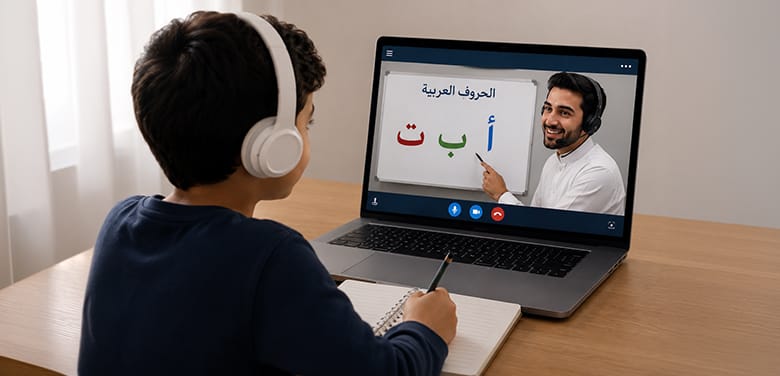
- The Arabic alphabet: recognisable in 1–2 weeks; a solid, confident foundation in 4–8 weeks. This early win is more achievable than most beginners fear.
- Basic survival Arabic (≈CEFR A1): introduce yourself, greetings, simple questions — around 150–200 hours, or a few months of steady study.
- Everyday conversation (≈CEFR A2): handle daily transactions, short exchanges — around 350–400 hours, roughly 6–12 months for most learners.
- Real conversational fluency (≈CEFR B1–B2): discuss familiar topics comfortably, read simple texts — well over 1,000 hours, typically 2–3 years part-time.
- Professional / academic mastery (≈CEFR C1+): the 2,200-hour FSI territory — several years of serious study.
Why Arabic has a “hard” reputation — and where it’s actually easier
Arabic’s difficulty is real but specific, not general. The genuinely challenging parts are:
- A new script written right-to-left, with letters that change shape by position.
- Sounds English doesn’t have — the guttural letters like ع (ayn), ح (ha), ق (qaf), and غ (ghayn).
- Diglossia — the gap between formal written Arabic and everyday spoken dialects (more on this below).
- Case endings (i’rab) and a root-based grammar system that feels unfamiliar at first.
But some features are genuinely easier than English: Arabic has no silent letters and is spelled almost exactly as it sounds; it has no tones (unlike Mandarin); and its logical three-letter root system means one root often unlocks a whole family of related words. The difficulty is front-loaded — the first few months are the steepest climb, then it accelerates.
The choice that changes your timeline: MSA or a dialect?
One decision affects your speed more than almost anything else: which Arabic are you learning?
- Modern Standard Arabic (MSA / Fusha) is the formal Arabic of books, news, and official writing — and the closest living form to the classical Arabic of the Quran. Choose it if your goal is reading, understanding the Quran, or pan-Arab formal communication.
- A dialect (Egyptian, Levantine, or Gulf) is what people actually speak day-to-day. Choose it if your goal is conversation in a specific region.
Trying to learn both at once, unstructured, is a common reason beginners stall — they mix registers and confuse themselves. Pick your lane based on your goal, get a foundation, then branch out. If your aim is the Quran, starting with a Quran-focused Arabic path is the most direct route to comprehension.
How to reach fluency faster (without cutting corners)
- Increase your weekly hours before anything else. Going from 2 to 5 focused hours a week can more than double your rate of progress.
- Get a real teacher. Apps can’t hear you pronounce ع or correct a grammar mistake in real time. Live instruction is the biggest accelerator, especially early on.
- Learn in context, not word lists. Vocabulary learned inside real sentences and by root sticks far better than isolated memorisation.
- Build daily habit, not weekend marathons. Fifteen minutes a day beats three hours once a week for retention.
- Choose one clear path. A structured curriculum aimed at your specific goal removes the wasted months most self-learners lose to wandering.
Match your goal to the right path
Because “learn Arabic” means different things, the fastest route depends entirely on what you’re aiming for. Here’s where to start based on your goal:
- Starting from zero, not sure of your goal yet? Begin with the fundamentals — the alphabet, pronunciation, and core vocabulary. Our Arabic for beginners course is built to give you that foundation before you specialise.
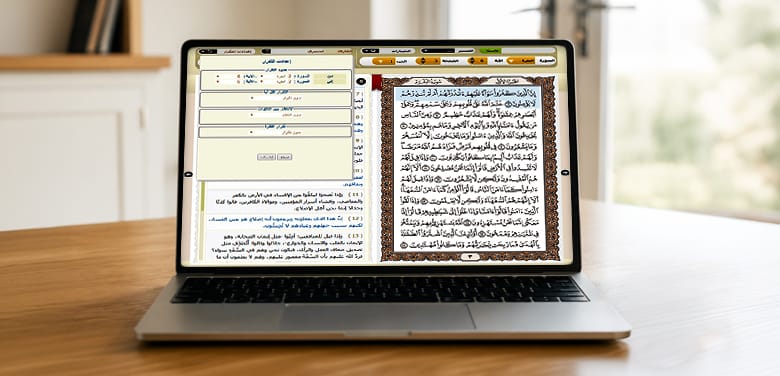
- Want to understand the Quran in its original language? A dedicated Quranic Arabic course focuses on exactly the vocabulary and grammar of the Quran — a far more direct route than general Arabic.
- Learning Arabic for work or the Gulf market? Our Business Arabic course targets professional communication, meetings, and contracts rather than survival phrases.
- Just want to speak and be understood? An Arabic conversation course puts speaking practice first, in the dialect that fits your life.
- Learning for your children? Kids learn very differently from adults — our Arabic classes for kids are built around how young learners actually acquire language.
The honest bottom line
How long does it take to learn Arabic? Long enough that you should start now, and not so long that you should be discouraged. The alphabet is weeks away. Basic conversation is months away. Real fluency is a multi-year journey — but you’ll feel meaningful, motivating progress far earlier than the end.
The learners who succeed aren’t the most gifted — they’re the most consistent, with a clear goal and real guidance. If you’d like to see how a structured, one-to-one path fits your specific goal and schedule, a free trial lesson is the simplest way to get a realistic roadmap built around you — no commitment, no pressure.
FAQ:
Can I learn Arabic in 3 months?
Not to fluency — but you can achieve a real, motivating start. In three months of consistent study you can master the alphabet, read simple vowelled text, introduce yourself, and hold very basic exchanges (around CEFR A1). Anyone promising full fluency in three months is overselling; Arabic is a Category IV language and genuine conversational ability takes 1–2 years. But three months is enough to prove to yourself that it’s achievable.
Is Arabic really one of the hardest languages to learn?
For English speakers, yes — the U.S. Foreign Service Institute places it in its hardest category (Category IV on the current scale, sometimes called V on the older one), needing about 2,200 hours for professional proficiency. But the difficulty is specific, not general: the script, guttural sounds, and diglossia are the hard parts. Some features are actually easier than English — Arabic is spelled as it sounds, has no tones, and uses a logical root system.
How many hours a week do I need to learn Arabic?
More than most people think. One class a week (about 50 hours a year) is the main reason many learners study “for years” and stay stuck. For steady progress, aim for at least 3–5 focused hours a week; 10–15 hours a week produces conversational ability within roughly 1–1.5 years. Daily consistency matters more than long, occasional sessions.
Should I learn Modern Standard Arabic (MSA) or a dialect?
It depends on your goal. Choose MSA (Fusha) for reading, formal communication, and understanding the Quran — it’s the closest living form to classical Arabic. Choose a dialect (Egyptian, Levantine, or Gulf) if your priority is everyday conversation in a specific region. Avoid mixing both randomly as a beginner; pick the lane that matches your goal, build a foundation, then branch out.
How long does it take to learn Arabic to read the Quran?
Reading the Quran aloud is faster than general Arabic fluency, because the text is fully vowelled — many learners read basic Quranic text within 3–4 months of consistent study. Understanding what you read is a separate, longer journey: meaningful comprehension of the Quran in its original language typically takes a couple of years of focused Quranic Arabic study. Reading first, understanding next.
Arabic Classes for Kids Online
The right time for a child to start Arabic is now — and the right way is different from how adults learn. Our Arabic classes for kids online are live, one-to-one, and built around how young learners actually acquire language: through play, patience, and progression matched to their exact age. From four-year-olds meeting their first Arabic letter to teenagers building real reading fluency, this is Arabic your child will love — not endure.
Arabic Conversation Course Online
Break through the silent learner barrier. Our Arabic conversation course online is built for people who can read Arabic, understand some of it, and still can’t get a full sentence out of their mouth. Live one-to-one speaking practice with native tutors in Egyptian, Levantine, or Gulf dialect — the languages Arabs actually use, not the textbook version nobody speaks at home.

Business Arabic Course Online
Do business in the language your clients think in. Our business Arabic course online is built for professionals working with Gulf, Egyptian, and MENA markets — live one-to-one lessons in Modern Standard Arabic (MSA) plus the regional dialect you actually need. From running a meeting in Riyadh to reading a contract from Dubai, this is professional Arabic for work, not a generic language app

Learn Arabic for Beginners Online
Start Arabic from zero — no prior knowledge, no assumptions, no shortcuts. Our beginner Arabic course online takes you from your first letter to your first real conversation, live one-to-one with native tutors. Whether your goal is understanding the Quran, doing business in the Gulf, speaking with family, or simply learning one of the world’s richest languages, this is the honest, structured foundation that gets you there.

Quranic Arabic Course Online
Understand the Quran in the language it was revealed. Our Quranic Arabic course online takes you from your first word to reading verses directly — without a translation between you and Allah’s words. Live one-to-one lessons in classical Arabic (Fusha), covering vocabulary, Nahw, Sarf, and the classical grammar that unlocks the Book. Built for adults and reverts starting from zero.